
Homemade padsicle tutorial: easing perineal swelling after birth
Prep takes about 5 minutes for about fifteen pads. Ideally, make them in late pregnancy so they're ready in the freezer on the big day. 🧊
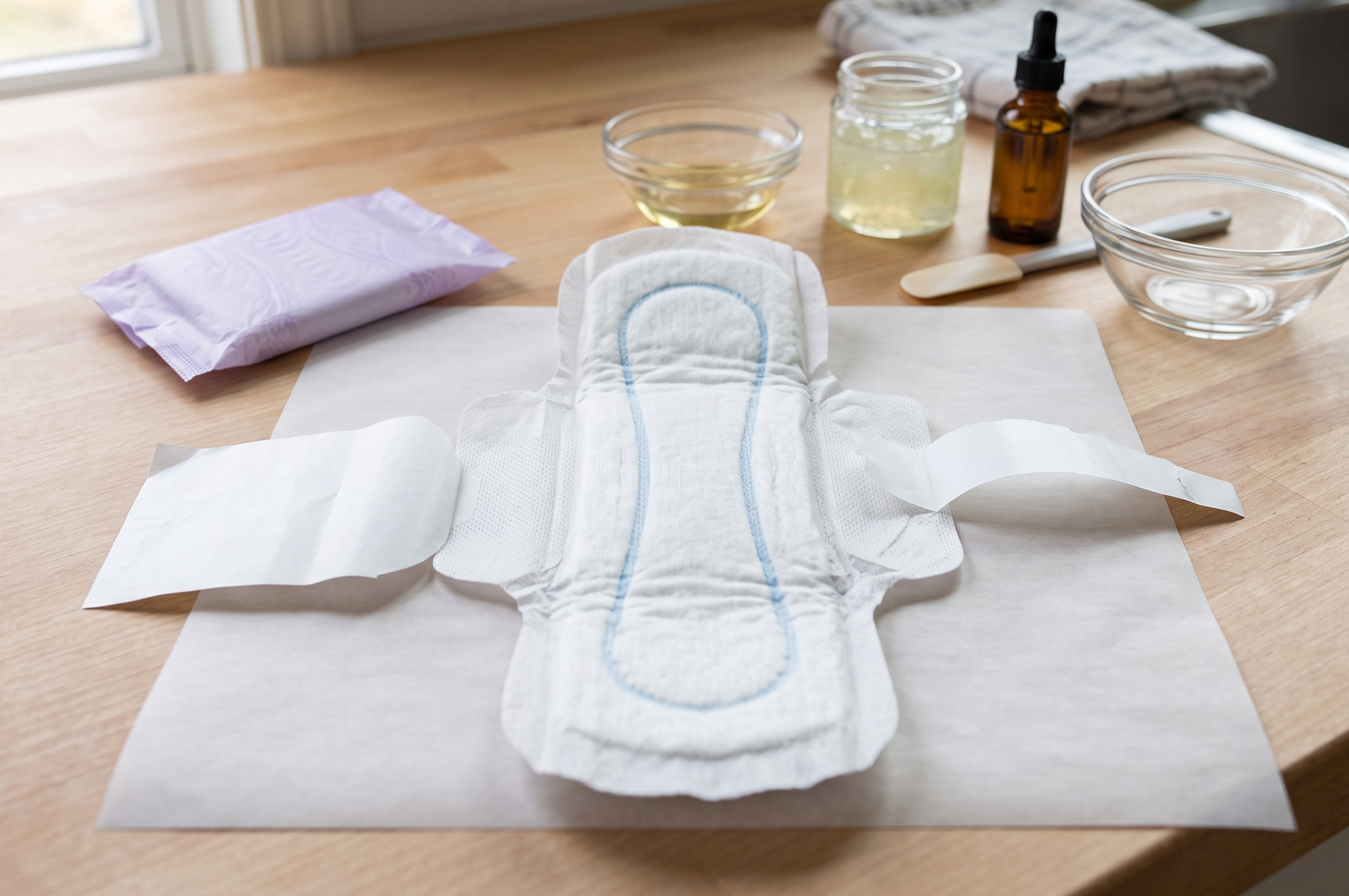
🌿 Open up the pad
Fully unfold a thick disposable sanitary pad (maxi or overnight), leaving the backing paper on.
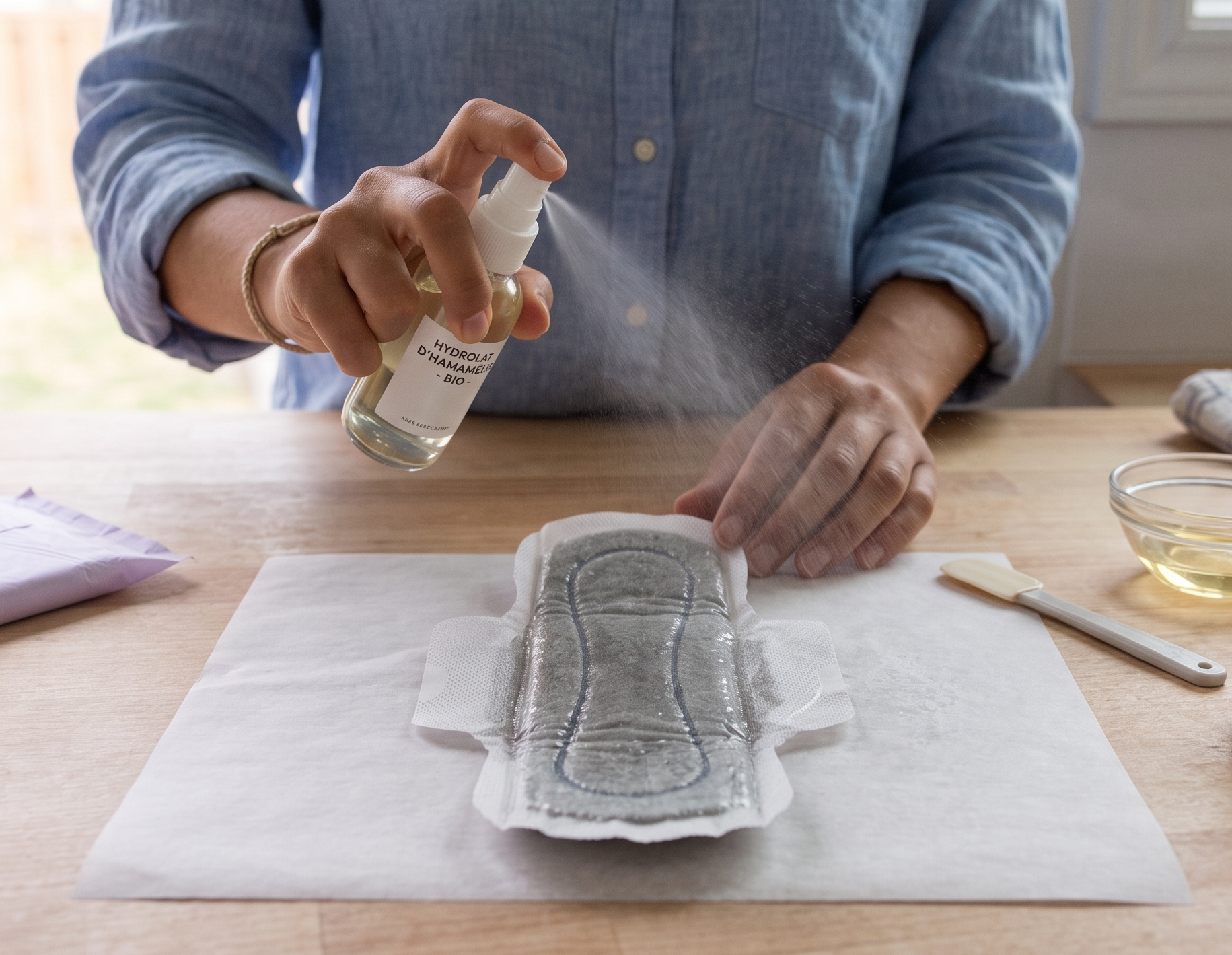
💧 Spray on the witch hazel hydrosol
Spray the whole absorbent surface generously. Witch hazel, sometimes called "witch water," is astringent and soothing.
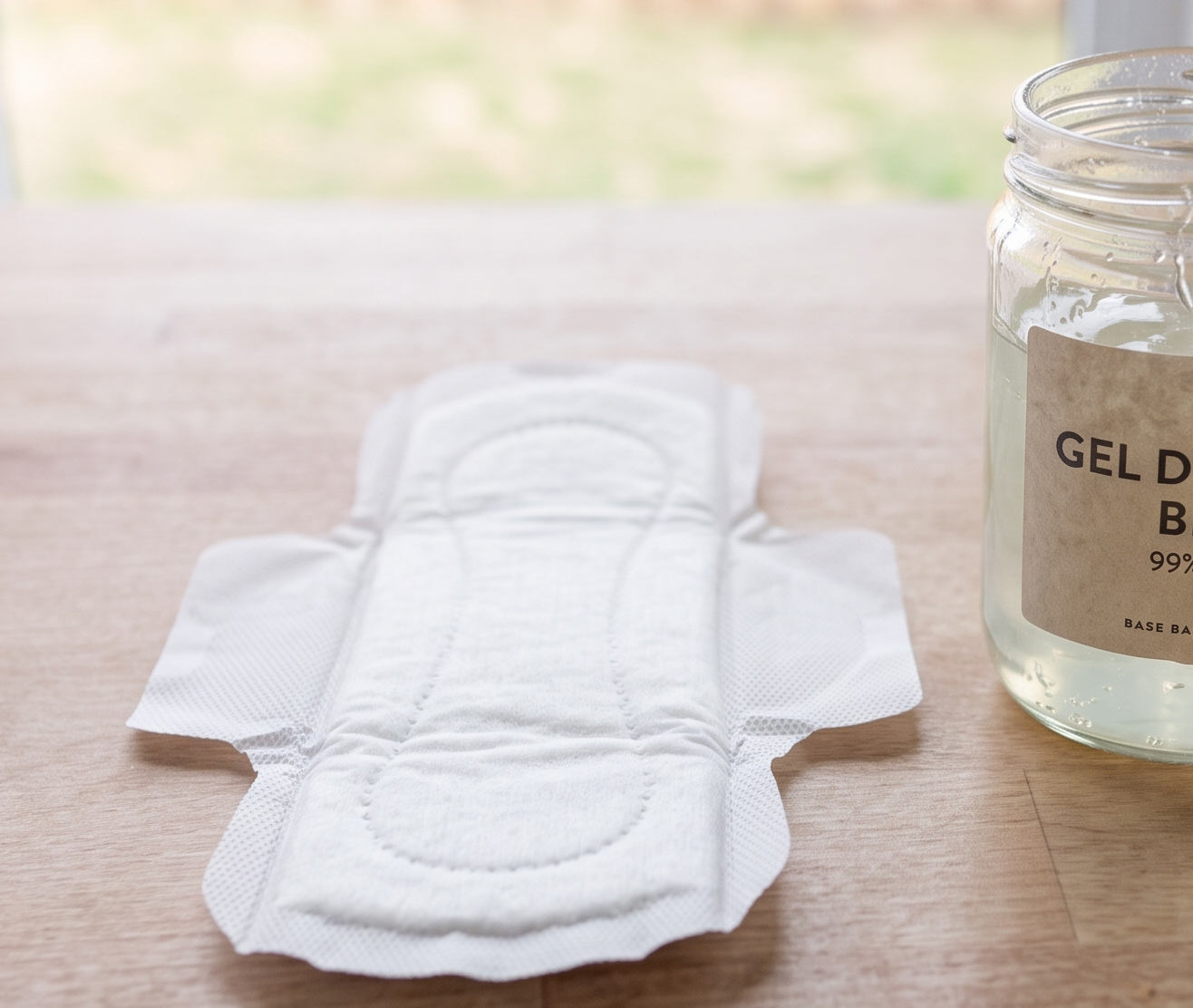
🌱 Spread on the aloe gel
Spread 1 to 2 tablespoons of pure aloe gel over the pad to soothe and hydrate the tissue.
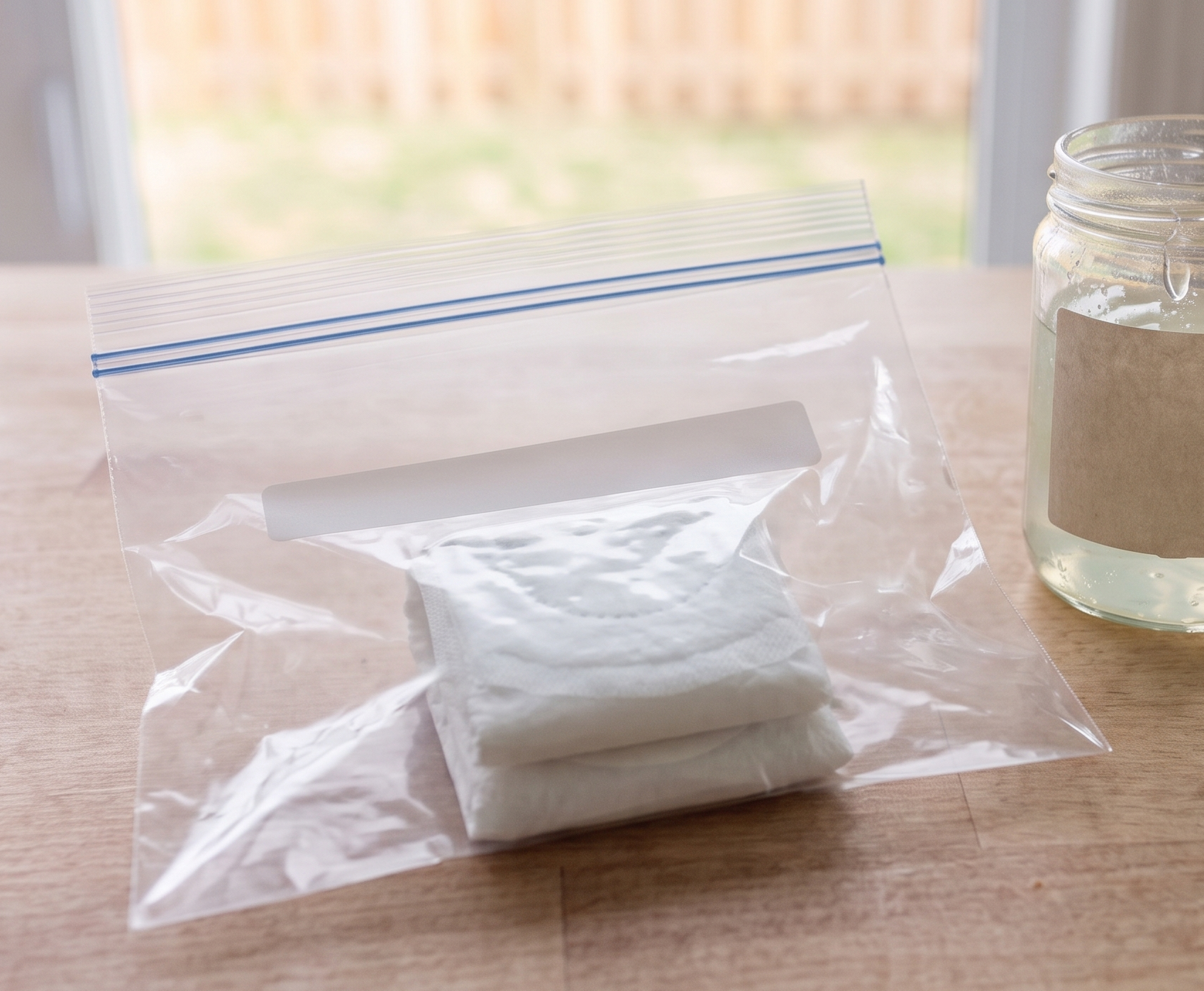
❄️ Fold it over and wrap it
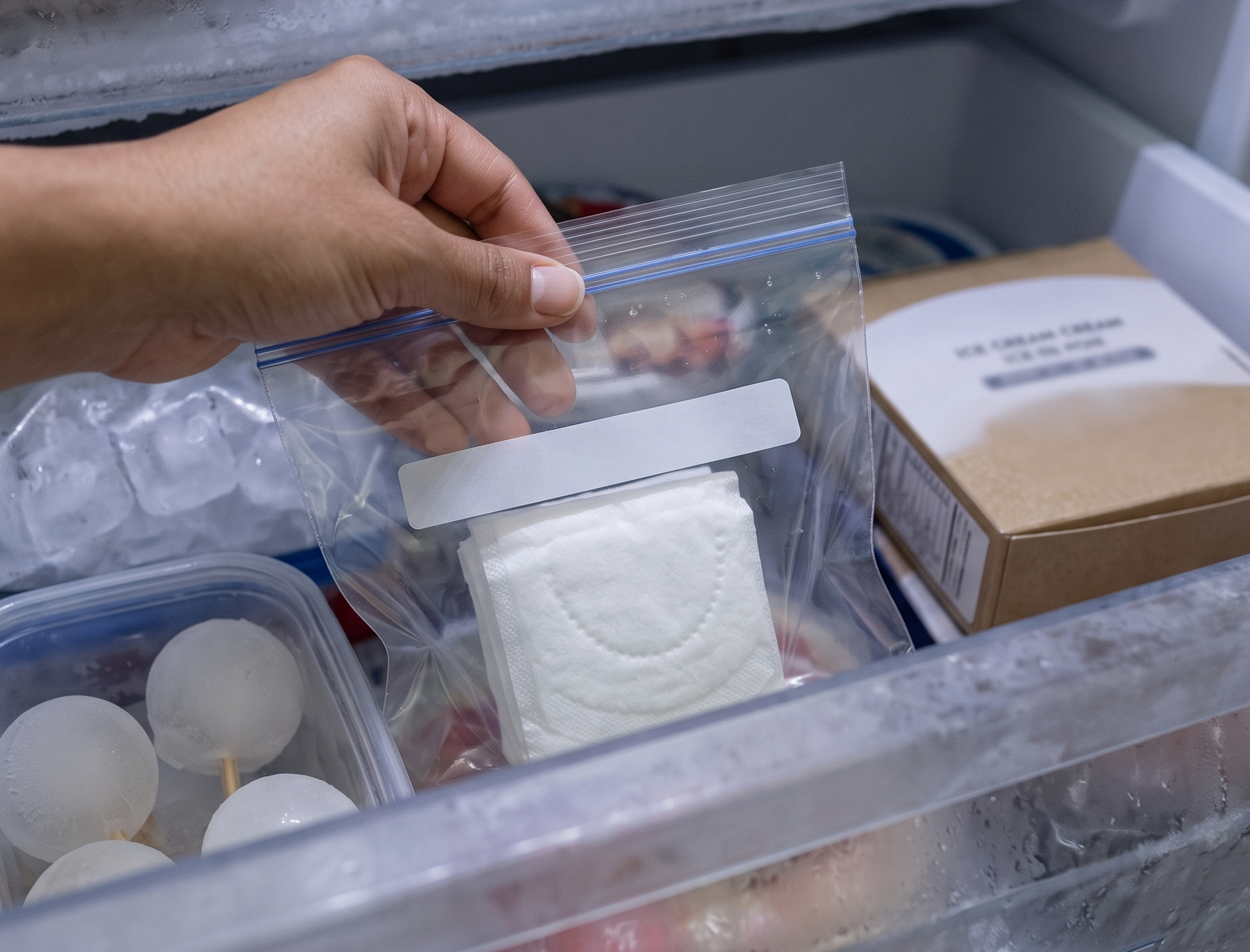
Fold the pad back up, replace the backing paper, then slide it into a resealable freezer bag marked with the date.
🕒 Freeze flat
Lay the pads flat in the freezer. They're ready in a few hours.
Before use: let it soften for a few minutes — cool, never rock-hard like an ice cube.
About to give birth? Get ready for what comes after.
Padsicles soothe the body; our doulas soothe everything else. Rest, meals, baby care and a caring ear: our postpartum home support in Montreal supports you at home during the first few weeks. Insurance receipts available.
Which ingredients to use and how many to make?
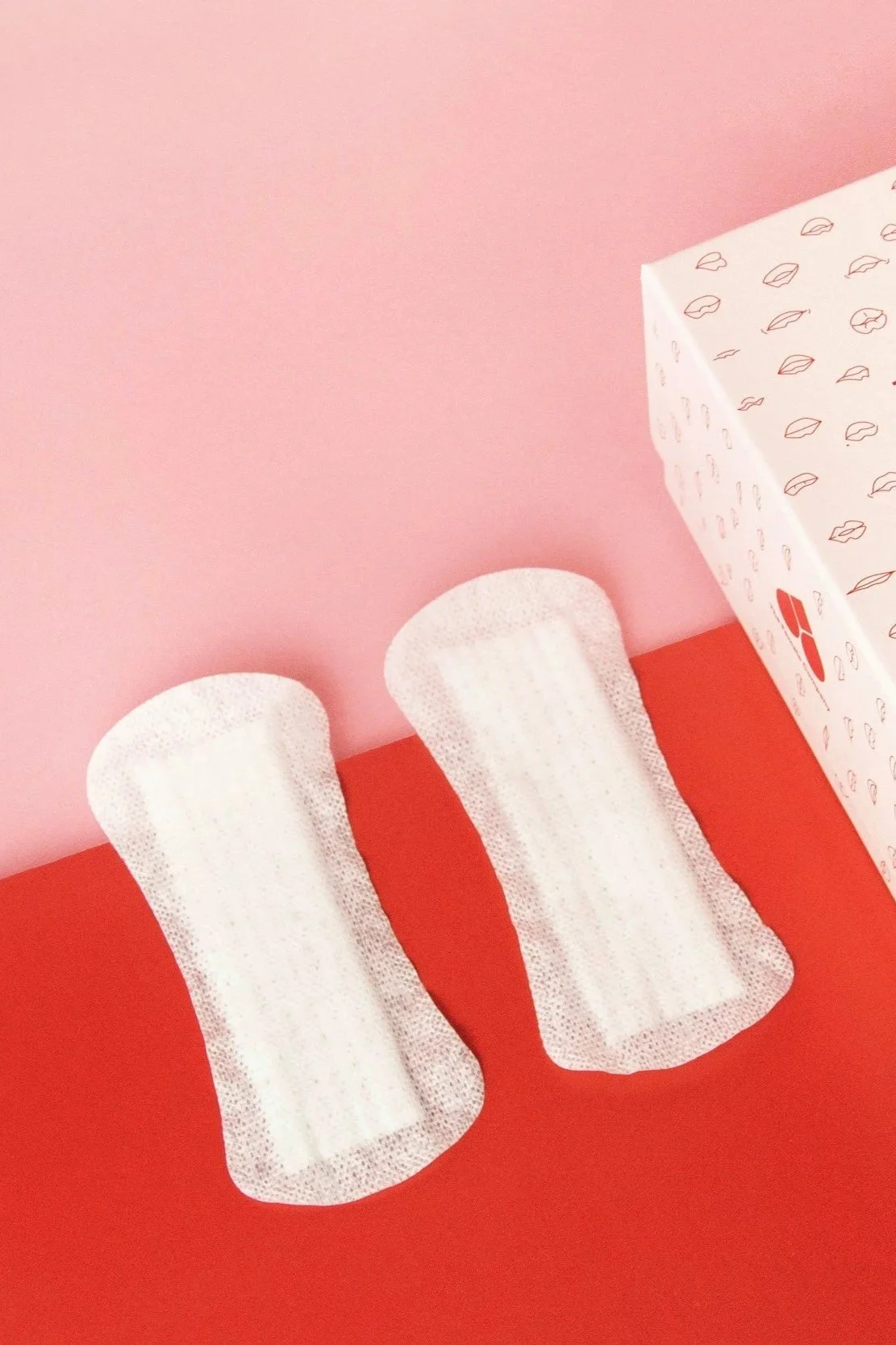
The basic recipe comes down to three things: an absorbent pad, witch hazel hydrosol and pure aloe gel. Here are the details and the amounts per pad.
Disposable sanitary pad (maxi or overnight) — absorbent base that holds the cold and the soothing products. → 1 pad
Witch hazel hydrosol (witch water, alcohol-free) — astringent and soothing, often used for tissue comfort. → spray generously
Pure aloe gel — soothes and hydrates sensitive skin. → 1 to 2 tbsp
Filtered water (optional) — adds a little freshness if the pad isn't very damp. → a light spray
💡 How many should you make? Plan on twelve to fifteen padsicles. Cold is most useful during the first 24 to 72 hours, when swelling and pain are at their peak; that's when you'll use the most.
How and when to use a padsicle safely
Short answer: in short stretches, with a clean barrier between the pad and your skin, especially in the first few days. Direct, prolonged cold on fragile skin can cause frostbite — the aim is comfort, not thermal shock.
❄️ Our guidelines, aligned with the recommendations of the SOGC and theACOG :
⏱️ 10 to 20 minutes maximum per application, then remove.
🔁 You can repeat every 1 to 2 hours during the first 24 to 72 hours, as needed.
🧻 Always keep a clean barrier (the pad itself, underwear, a thin cloth) between the cold and your skin — never put ice directly on the skin.
🌡️ The padsicle should be fresh, not frozen solid : let it warm up for a few minutes before wearing it.
🩹 Change it like a regular pad to keep the area clean and dry between applications.
After the first few days, many families find a lukewarm sitz bath more comfortable than cold.
Naître et grandir suggests 10 to 15 minutes, several times a day, especially after a bowel movement.

When cold isn't enough: which signs should worry you?
The padsicle eases the normal discomfort of the first few days. It does not treat a complication. Some signs mean you should contact the place where you gave birth, or a health professional, without delay.
See a professional if you notice:
🌡️ From a fever or chills.
🩸 A bleeding that's getting heavier instead of easing off, or soaking more than one pad an hour.
👃 Some discharge with an unusual smell or foul-smelling.
🔴 Some redness, discharge or an opening over the tear or the episiotomy.
📈 Pain pain that keeps getting worse instead of easing off as the days go by.
🚽 A pain or burning when you urinate that lasts several days.
These guidelines are based on the recommendations of Naître et grandir and theAmerican College of Obstetricians and Gynecologists (ACOG). When in doubt, trust yourself and call your doctor — no one knows your body better than you do.
All your questions about padsicles
-
Late pregnancy is ideal, around 36 weeks or later, when you're packing your bag. They'll wait for you in the freezer, ready to use as soon as you come home. So you don't forget anything, download our hospital bag checklist free.
-
Wrapped well in a resealable freezer bag and dated, they keep for several months. Use a clean container and avoid refreezing them once thawed.
-
The padsicle targets the perineum, which is less affected by a caesarean. If you do have vulvar swelling, it can still bring comfort. For the abdominal incision, follow your care team's instructions instead; you'll find helpful recovery guidance on Naître et grandir.
-
To be safe, we don't recommend it right away on broken skin postpartum. A witch hazel and aloe recipe is plenty. If you'd still like to try it, check first with your midwife, your doctor or a doula in Montreal trained in perinatal care.
-
In 10- to 20-minute stretches, letting the skin warm up between applications, especially during the first 24 to 72 hours. Continuous, prolonged cold is best avoided. This lines up with the recommendations of theACOG, and the Cochrane notes that cold mainly eases discomfort and doesn't replace medical follow-up.
-
That's exactly what we're here for. Our postpartum home support in Montreal supports you at home: rest, meals, baby care and a listening ear. To talk it through, book a free discovery call.
This article is for information only and does not replace advice from a health professional. For any decision about your recovery, talk to your midwife, your doctor or the place where you gave birth.

Émilie Péru — doula and perinatal naturopath
A member of the AQD (2020) and the ANPQ, she specializes in breastfeeding, perinatal hypnosis, babywearing, Spinning Babies® and twin births. Since 2023 she has taught at the Mère et Monde school, training the next generation of doulas in Quebec.