The nuchal translucency scan: 9 common questions
Practical guide – Nuchal translucency scan
- What is the NT scan?
- Why do you have this scan?
- How does the NT scan work?
- What results are possible and how do you read them?
- Is this scan compulsory?
- Should you have someone with you for this step?
- What are the next appointments after the NT scan?
- Are there any risks with the nuchal translucency scan?
- How do you prepare mentally and physically for the NT scan?
What is the nuchal translucency scan?
The nuchal translucency scan, very often called the "NT scan," is an ultrasound done during the first trimester of pregnancy, usually between 11 and 14 weeks of amenorrhea. It measures the thickness of the nuchal translucency (that is, the fluid-filled space behind the back of the fetus's neck).
That measurement, combined with the mother's age and sometimes with specific blood tests, makes it possible to assess the risk of the baby carrying certain chromosomal abnormalities, such as trisomy 21 (Down syndrome).
This appointment can cause some anxiety. It's an important one, because it provides valuable information about the baby's health and lets you, as a family-to-be, be supported gently and precisely at every stage of your pregnancy care.

Did you know?
The Ysé Naissance doulas can round out your pregnancy care; they offer a complete support to get ready and be fully informed of the steps and paperwork to plan for.
Why do you have this scan?
The main aim of the nuchal translucency scan is to screen early for certain risks, while checking that the fetus is developing well.
- Detection of chromosomal abnormalities (mainly trisomy 21, but also others such as trisomy 13 or 18).
- Assessment of embryonic vitality (presence of a heartbeat, development of the limbs, position of the gestational sac and so on).
- Confirming the dating of the pregnancy: the nuchal translucency scan gives a very precise date for the pregnancy (more so than the date of your last period), which is useful for proper follow-up.
- Looking for any early malformations.
How does the NT scan work?
The appointment is usually straightforward: you'll be settled comfortably, often on your back, with your abdomen slightly uncovered.
💧 A gel is applied to your abdomen.
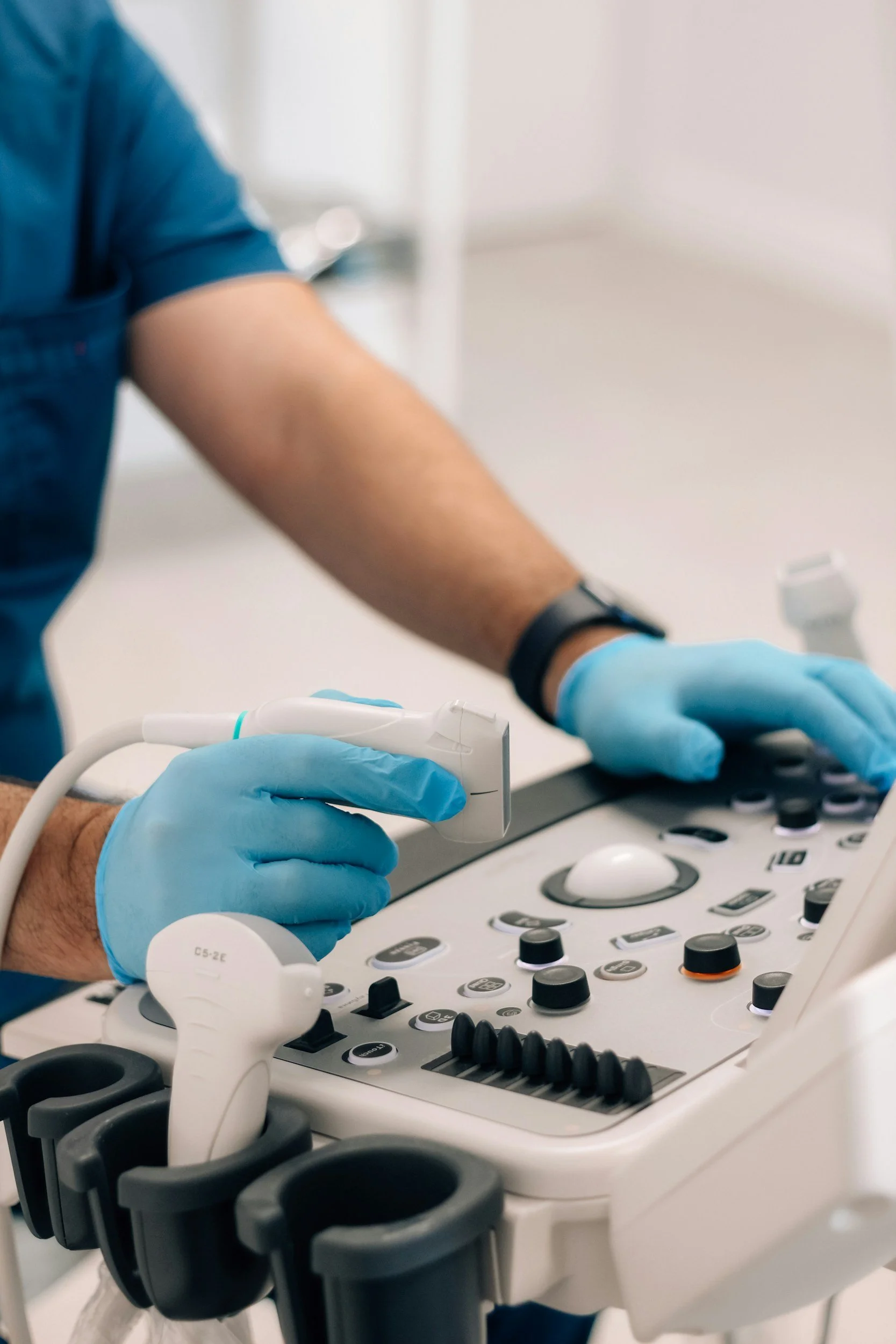
🖥️ The professional uses an ultrasound probe to see the baby on screen.
📏 They take various measurements, in particular the crown-rump length of the fetus and, of course, the nuchal translucency itself.
🧘🏻♀️ No particular preparation is needed, though a vaginal scan may sometimes be suggested if the view through the abdomen isn't good enough, which is fairly rare at this stage.
🫶🏻 At this appointment you may also sometimes hear (or even see!) your baby's heartbeat — often a very moving moment!
Looking for support from a certified doula?
Book your first discovery call.
What results are possible and how do you read them?
Results are usually given as a measurement (in millimetres) of the nuchal translucency. Reading that figure on its own isn't enough, though: it comes alongside other information about maternal age and, generally, a blood test to assess the risk as a whole.
| Nuchal translucency measurement | Interpretation |
|---|---|
| Less than 3 mm | Considered normal at this stage of pregnancy |
| Between 3 and 3.5 mm | To keep an eye on, risk possibly increased: further discussion to plan for |
| More than 3.5 mm | Further tests often suggested (blood screening, amniocentesis or fetal DNA test) |
Is this scan compulsory?
In fact, the nuchal translucency scan isn't compulsory. As an expectant mother, you always have a choice (throughout your care, in fact): nobody can impose a medical exam on you if you don't want it. In Quebec this scan is offered as a matter of course, because it's part of the integrated prenatal screening (DPI).
Some families prefer not to have this exam, often as an ethical choice or in order to have a more physiological pregnancy. If that fits your values, it's essential to talk it over with your health professionals (doctor, midwife or birth companion).

Meet our team
Different personalities, one dedicated team, so you get support that fits who you are.
Should you have someone with you for this step?
The answer is: it's your choice! Many people want to share this moment with a partner or a family member. Others prefer to experience the scan privately. This appointment can be emotionally charged (joy, worry, relief…), so it's completely normal to feel the need for support.
In my work I notice that feeling surrounded by support makes a real difference in managing stress and taking in this new stage.
What are the next appointments after the nuchal translucency scan?
This scan opens a series of appointments you can't skip, both medical and emotional. Here's what to expect next:
- The 2nd trimester scan (around 20–22 weeks), to look at the fetus's anatomy in more detail.
- The blood test for trisomy 21 (often done at the same time as the nuchal translucency scan, or in the days that follow).
- Other tests according to your health professionals' recommendations (for example, gestational diabetes screening or screening for infections).
- Going over the results: in some cases, a cell-free fetal DNA test or an amniocentesis may be suggested to look further if the risk is thought to be high.
- Regular meetings with your birth companion, who can tailor the information you receive, support your choices and prepare you for any eventuality.
Are there any risks with the nuchal translucency scan?
Obstetric ultrasound as practised in Quebec (and worldwide) is considered a very safe exam, both for the fetus and for the mother.
There's no radiation and no pain involved in this exam. The risks are essentially psychological if the result turns out to be worrying or inconclusive — which is why it matters to have good people around you and proper support to handle the emotions that can follow.
How do you prepare mentally and physically for the NT scan?
Even though the exam itself doesn't call for any particular medical preparation, being ready mentally matters just as much. Here's some advice drawn from my experience with expectant mothers:
📝 Don't hesitate to write your questions down in advance: it helps clarify what you're hoping for and means you won't forget anything on the day.
👯♀️ Ask for someone to come with you if you need to. Psychological support and the presence of someone you trust can reduce stress.
🧘🏻♀️ Remember that this exam is a guide, not an absolute diagnosis.
🫂 Take the time, after the exam, to talk about how you felt.
Don't hesitate to book an appointment with a birth doula for a full debrief or simply to better understand the questions the scan raises.
Finally, it's completely natural to feel apprehensive. Far from being a purely technical procedure, the nuchal translucency appointment is also a chance to build the first real bonds with your baby 🤱💞.
* The information in this article is provided for information only and doesn't replace the personalized care of a doctor. Don't hesitate to consult a health professional for advice suited to your situation.

Remember that every pregnancy is unique
Choosing a birth doula can make all the difference to how you experience becoming a parent.
Find all of the childbirth preparation services on offer as well as the reviews families supported by the Ysé Naissance team ⭐️⭐️⭐️⭐️⭐️