Membrane sweeping to induce labour: 6 things to know
- What is a membrane sweep?
- How is a membrane sweep done and how long does it take?
- Why is a membrane sweep offered, and in what situations?
- Is a membrane sweep effective at bringing on labour?
- What are the risks and side effects of a membrane sweep?
- Can you refuse a membrane sweep, and are there alternatives?
- How do you prepare for a membrane sweep and what should you do afterwards?
What is a membrane sweep?
The membrane sweep, or stripping of the membranes, is a simple technique used to try to bring on labour naturally when your due date is approaching or has passed.
This medical procedure involves passing a gloved finger through the cervix in order to gently separate the amniotic membrane surrounding the baby from the wall of the uterus.
This movement naturally stimulates the production of prostaglandins, hormones that help get labour started.
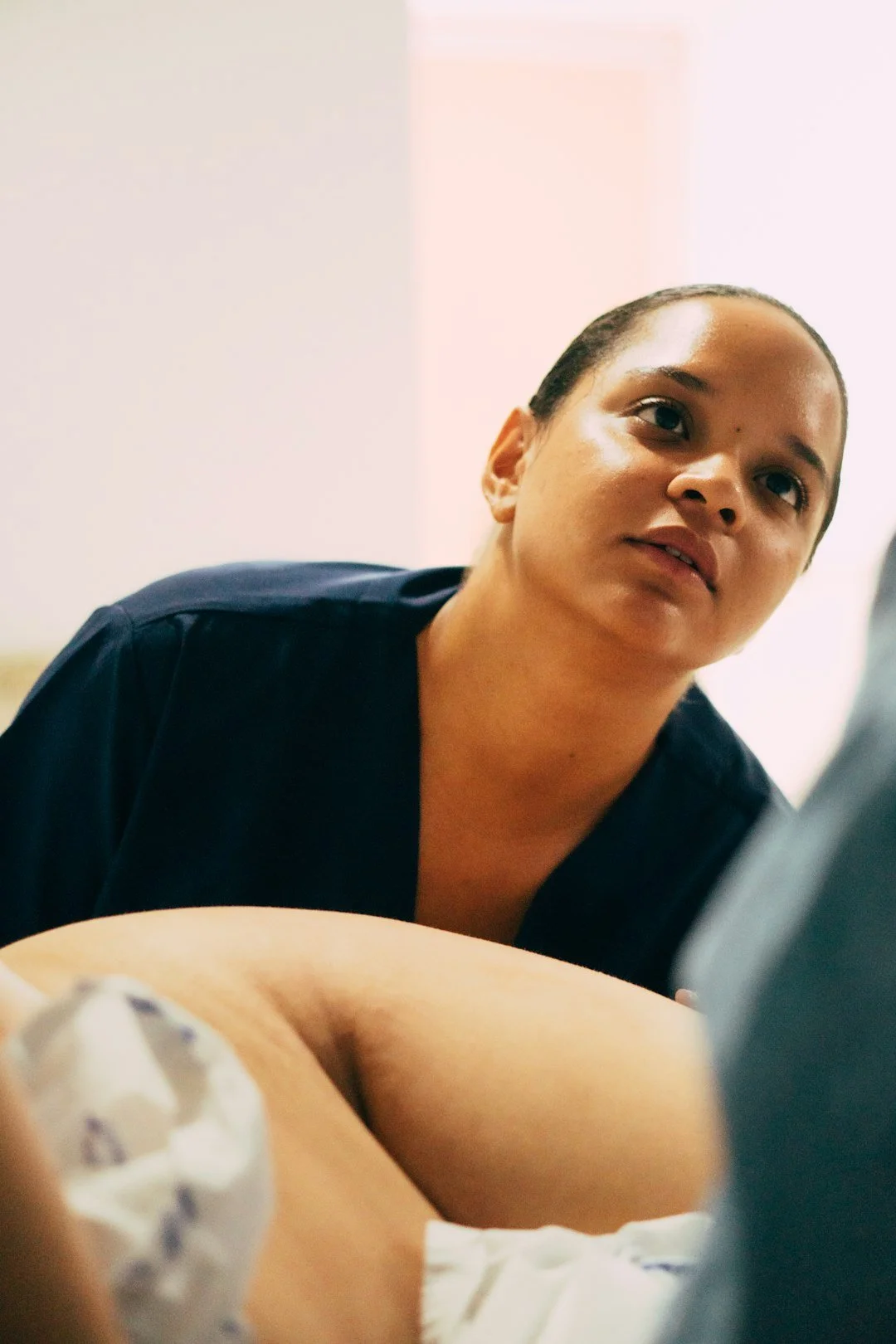
This method is done during a vaginal exam, usually by a midwife or a doctor, when certain conditions are met — in particular that the cervix is already slightly open (dilated) and that the pregnancy has reached at least 39 weeks.
Watching for the first signs of labour after a membrane sweep

The membrane sweep at a prenatal appointment
Doula support in Montreal in late pregnancy
How is a membrane sweep done and how long does it take?
A membrane sweep is a quick procedure, usually done at a follow-up appointment late in pregnancy.
The procedure itself takes only a few minutes, but it can cause some discomfort or mild pain. You may also notice some spotting (small amounts of blood) or contractions in the hours that follow.
Here's how it typically goes:
| Step | Details | Length |
|---|---|---|
| Gynecological exam | Checking the cervix (dilated, softened, effaced) | 2 to 3 min |
| Sweeping the membranes | Passing a finger to separate the membrane | 1 to 2 min |
| Rest and observation | Discussion of what may follow, monitoring | A few minutes |

Need a break after the birth?
Your newborn can be cared for by a certified birth companion (insurance receipts available). Our doulas come to your home, look after your baby and keep an eye on your recovery — while you rest, eat a hot meal or finally get a few hours' sleep.
Why is a membrane sweep offered, and in what situations?
Late pregnancy and bringing on labour naturally in Montreal
A membrane sweep is offered in a range of situations, mainly to avoid a standard drug-induced induction. It's generally recommended
📅 When the pregnancy goes past 39 weeks and the cervix is already slightly open.
🤰🏻 In cases of prolonged pregnancy (past the due date).
🥼 If the medical team wants to encourage labour to start on its own, particularly when medical factors (high blood pressure, gestational diabetes) make an early birth desirable.
🐣 Sometimes at the pregnant woman's request, to head off a planned artificial induction.
In most cases it's about encouraging a physiological birth and giving nature more time, while gently supporting the body towards the birth.
Is a membrane sweep effective at bringing on labour?
According to several scientific studies and guidelines, a membrane sweep doesn't bring on labour reliably or automatically, but it does increase the chances of labour starting naturally in the days that follow.
👩🏻⚕️ On average, after a membrane sweep done from 39 weeks on, 1 woman in 8 (about 12%) gives birth within 48 hours, and close to 60% give birth in the following week.
🪄 It isn't magic, but the procedure has the advantage of being minimally invasive, of limiting the use of synthetic hormones such as oxytocin, and of respecting the body's own rhythm.
If labour doesn't start after one or more membrane sweeps, the medical team can then suggest other ways of bringing on labour.
Birth companions, like those at Ysé Naissance, can help you understand the full range of options open to you.

A cocoon for your newborn
The thalasso bath recreates the sensations of amniotic fluid: gentle warmth, floating, deep calm. A unique wellness ritual, carried out by our certified doulas, to give your baby a rare moment of relaxation in the first weeks of life.
What are the risks and side effects of a membrane sweep?
A membrane sweep is considered a safe method when it's done by a trained professional. That said, like any medical procedure, it isn't free of possible discomfort or side effects.
Here's the key takeaway:
🌹 Pain or discomfort: the procedure can be unpleasant, even a little painful, especially if the cervix isn't very ripe.
🩸 Light bleeding: a little bleeding after the procedure is common and nothing to worry about. If there's a lot of it, or signs of hemorrhage appear, you need to seek care quickly.
💪 Irregular contractions: it's common to feel irregular contractions or "false labour" in the hours or days that follow.
🦠 Risk of infection: this stays low as long as strict aseptic technique is used. I always make sure infection-control measures are followed if I'm supporting someone through this step.
💧Waters breaking early : very rare, this risk means the procedure has to be stopped if it happens.
A membrane sweep doesn't generally raise the risk of serious complications such as needing a caesarean.
To give yourself the best chance, don't hesitate to ask a birth companion all your questions, whether that's as part of full or one-off support, like the ones we offer.
Can you refuse a membrane sweep, and are there alternatives?
Late pregnancy and bringing on labour naturally in Montreal
Yes, of course — consent always comes first! Nobody has to go through this procedure, and there are various alternatives. Your choice must be respected, whether you decline it or want to put it off.
Among the gentle alternatives, these include:
- Acupuncture: known for its toning action on the uterus. Many women in Quebec find it a very effective support.
- Sex: thanks to the prostaglandins in semen, it can help trigger the natural production of these hormones.
- Nipple stimulation: this technique also encourages the release of oxytocin.
- Some mobility and relaxation exercises, guided by a birth companion.
If a membrane sweep isn't right for you, or if you'd like to combine several methods, choose the approach that's most comfortable and safest for you, in discussion with your medical team.
How do you prepare for a membrane sweep and what should you do afterwards?
So the experience goes as smoothly as possible, here's my advice, based on supporting many families:
📅 Before: find out what's involved and ask all your questions about how it's done, the risks and what comes next. If it helps, ask someone to come with you to the appointment.
📍 On the day: eat lightly, dress comfortably and plan for some rest afterwards. Breathe deeply during the exam; that often helps release the tension.
💧 Afterwards: keep an eye on vaginal discharge and on the frequency and intensity of contractions. Note any unusual changes (fever, heavy discharge, reduced fetal movement…). Keep your phone nearby just in case.
💛 Rest and gentleness: the day can be emotionally taxing. Give yourself a quiet moment and don't hesitate to ask for help and a listening ear from your doula.
A personalized support, like the one offered at Ysé Naissance, lets you go through this transition with kindness, a listening ear and respect for your choices.

Doubts, pain, questions? We come to you.
Positioning, latch, pumping, milk coming in, going back to work: our certified companions come to your home to observe, adjust and reassure you. Insurance receipt available.
In short
A membrane sweep is a gentle option, common and generally well tolerated, used to help bring on labour at the end of pregnancy.
How well it works varies from person to person, but it often makes it possible to delay or avoid the need for more invasive methods of induction. If you're considering this method, don't hesitate to ask a birth companion for advice.
Don't forget: it's essential to talk with a health professional before changing anything you do or agreeing to any procedure during your pregnancy.
Sources:
This article is for information only and does not replace the advice of a health professional.
Society of Obstetricians and Gynaecologists of Canada (SOGC), Induction of Labour at Term, 2020.
Université de Montréal, Induction of labour: methods and considerations.
Remember that every pregnancy is unique
Choosing a birth doula can make all the difference to how you experience becoming a parent.
Find all of the childbirth preparation services I offer as well as the reviews families I have supported. ⭐️⭐️⭐️⭐️⭐️